ApiHealth research laboratory

Science & Research

ApiHealth Science & Research

ApiHealth NZ Ltd combines beekeeping, patented extraction technologies, and laboratory science to develop advanced bee-derived health products. This page summarises the core science behind VENZ™ bee venom, venom collection technology, allergen reduction research, bee pollen innovations, and propolis extraction.

Patented non-harmful venom collectionLab-verified quality controlTraceable New Zealand sourcing

Trust & Compliance

Certifications and provenance

Independent, industry, and regulatory markers that back ApiHealth's bee-science operations.

MPI RMP certified

Verified under NZ Ministry for Primary Industries risk management program.

UMFHA member

Member of the Unique Manuka Factor Honey Association.

SFDA approval (Saudi)

Approved for Saudi import and compliance.

Operational since 1997

Over two decades of bee-science manufacturing.

Patent #329585

Bee-friendly venom collection patent for VENZ™.

What you'll find here

A concise, research-forward overview of ApiHealth's science program: VENZ™ bee venom with a defined therapeutic profile, non-harmful patented collection, allergen-reduction findings, and advanced extraction for pollen and propolis.

Standardised VENZ™ venom profile (batch-to-batch consistency)

Allergen-reduction research and validation work

Laboratory QA assays: melittin, PLA2, hemolytic activity

Functional formulation R&D for honey and supplement formats

Extraction method development for pollen and propolis in honey matrices

Stability & compatibility testing across real-world storage conditions

VENZ™ – New Zealand Bee Venom illustration

venz

VENZ™ – New Zealand Bee Venom

Overview

VENZ™ is ApiHealth’s trademark bee venom with a defined therapeutic profile and reduced allergenicity, produced via patented non-harmful collection technologies.

Key Qualities

  • New Zealand-sourced venom with unique enzymatic activity
  • Produced without harming bees (Patent #329585)
  • Highly controlled dosing suitable for functional health products
  • Hypoallergenic profile when used in formulations

Certificates & Quality Control

  • Certificate of Quality—details physical, chemical, and biological parameters
  • Certificate of Origin—traceability of collection time and apiary
  • Only supplied to companies with proper facilities (not individuals)

Core Laboratory Parameters

  • Insoluble admixtures
  • Moisture / weight loss after drying
  • Total ash
  • Hemolytic activity
  • Phospholipase A2 activity
  • Mellitin content
  • Apamin content
Bee Venom Collection Technology illustration

venom collection

Bee Venom Collection Technology

Background

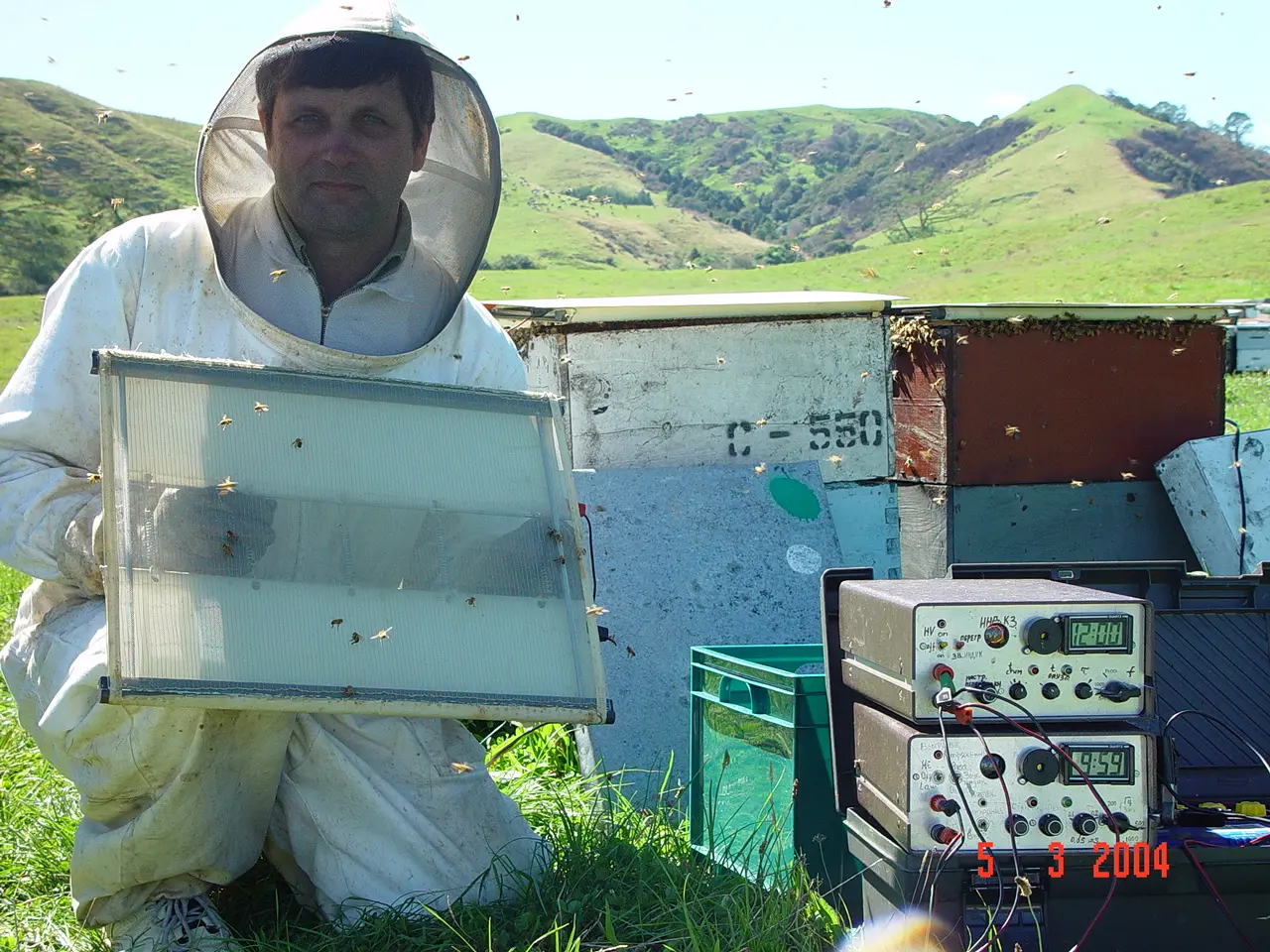
ApiHealth began venom collection in 1997 and is now one of New Zealand’s main commercial producers.

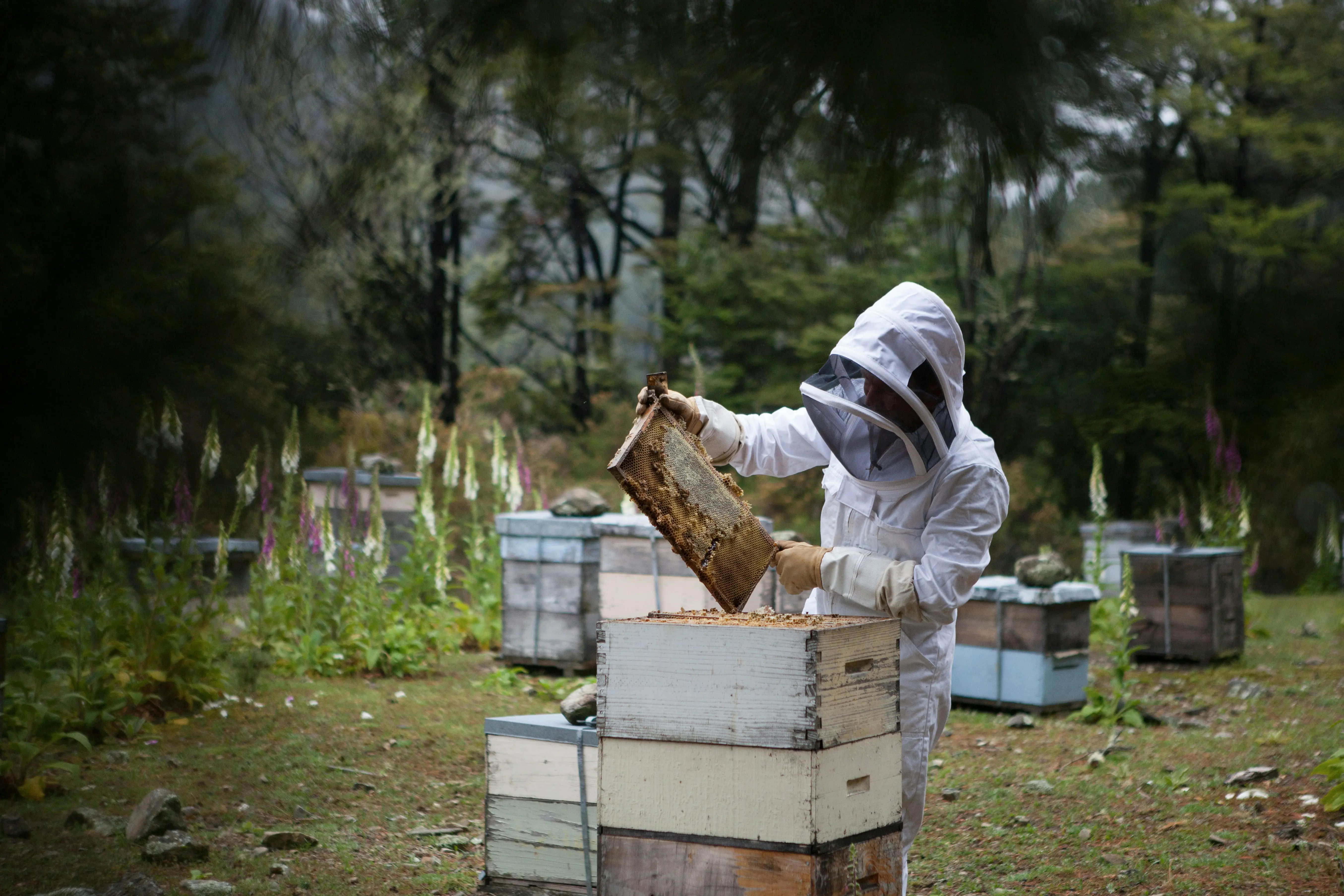
Collection on the Apiary

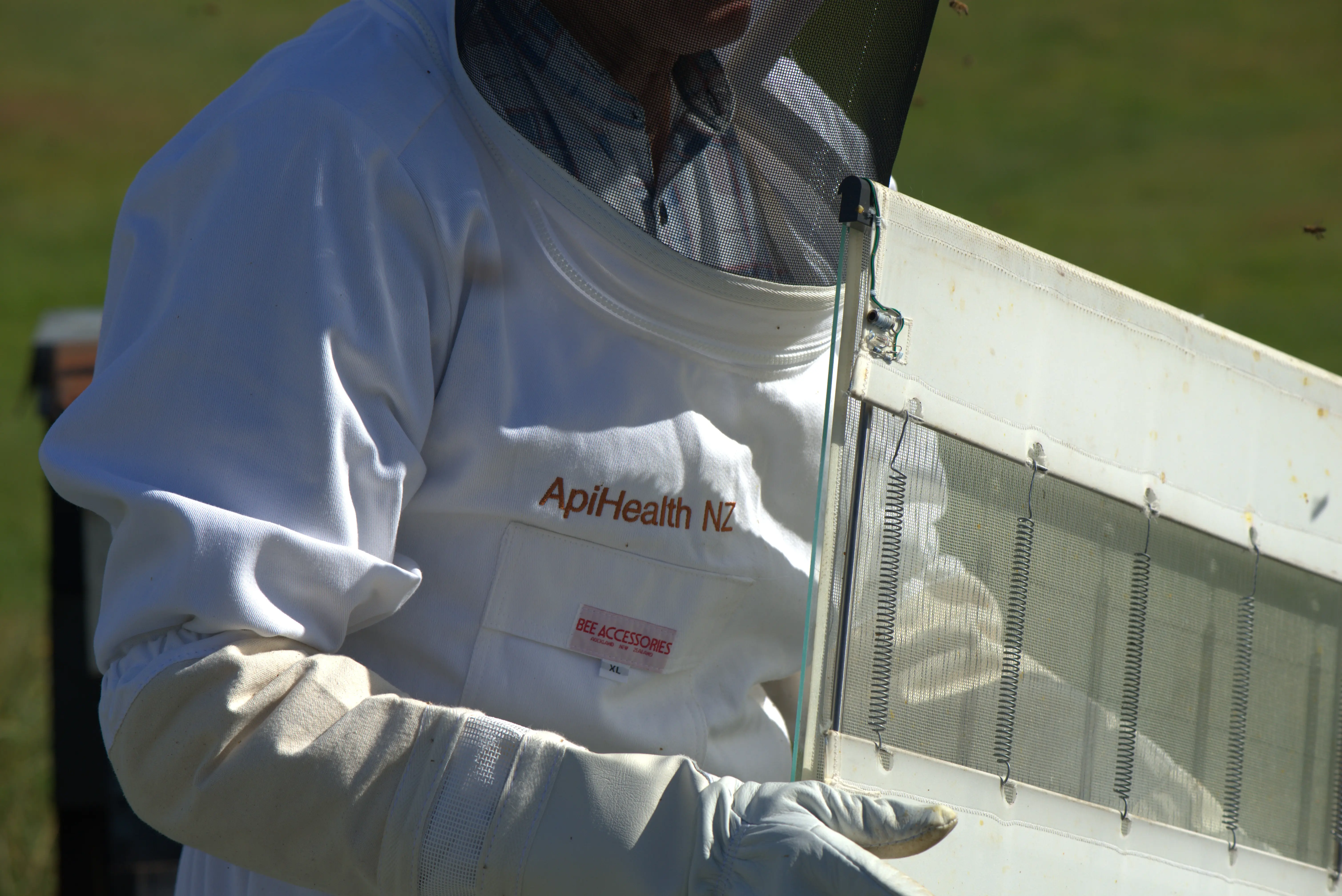
  • Electrical venom collectors stimulate bees gently without harm
  • Bees sting a glass plate placed in the hive via a wire frame
  • Dried venom remains on the glass surface
  • Frames are transported in sealed containers to the laboratory

Laboratory Processing

  • Dried venom is scraped and refined in controlled conditions
  • Venom is stored in dark glass jars to protect bioactivity
  • Kept in cool, dry storage to maintain stability
Reducing Allergenicity: Phospholipase A2 in Honey illustration

allergenicity

Reducing Allergenicity: Phospholipase A2 in Honey

Objective

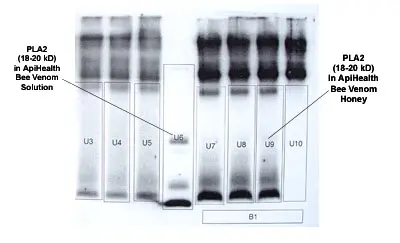
ApiHealth conducted research to determine how allergenic PLA2 behaves when bee venom is mixed into honey.

Western Blot Analysis Findings

  • PLA2 loses its ability to bind venom antibodies after specific honey–venom processing
  • Result indicates significantly reduced allergenic activity
  • Honey-venom formulations become safer for consumer use

Experiment Controls

  • Honey with added bee venom
  • Pure bee venom solution
  • Plain honey

Gel lanes explained:

  • U3, U4, U5, U7, U8, U9 – Honey with added bee venom (test samples)
  • U6 – Bee venom solution (control)
  • U10 – Honey without bee venom (control)
Bee Venom Research Programme illustration

venom research

Bee Venom Research Programme

Main Research Directions

  • Development of new venom collection technologies
  • Biochemical and physicochemical analysis of NZ bee venom
  • Detailed investigation of Phospholipase A2 activity
  • Methods to measure venom concentration in finished products

Scientific Collaboration

  • Partnerships with Russian research institutions
  • Technology exchange to advance analytical capabilities
  • Joint development of new health formulations

Quality & Safety Focus

  • Highly sensitive laboratory analytics
  • Validation of biological activity in finished products
  • Strict process control for blending venom into liquid honey
Bee Pollen Research illustration

pollen research

Bee Pollen Research

Core Technologies

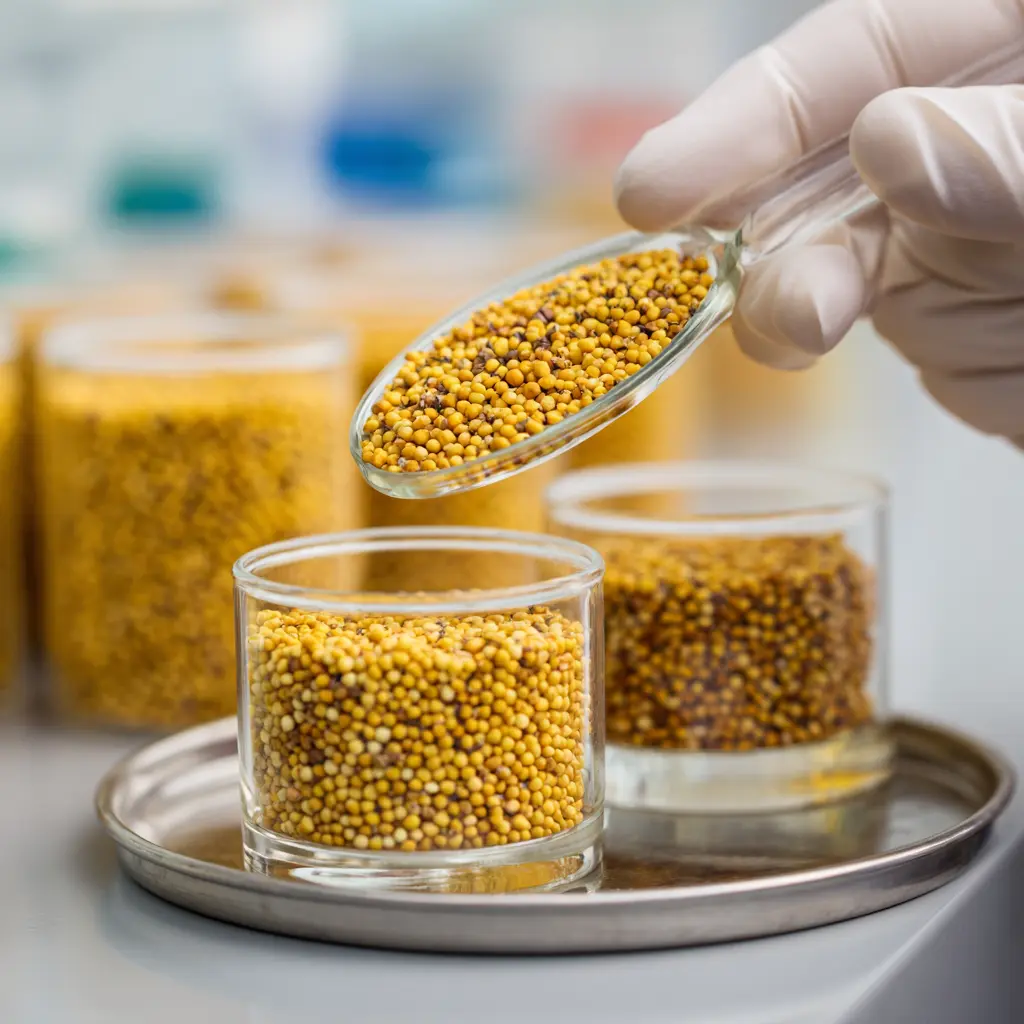
  • Breaking pollen grain shells for improved bioavailability
  • Producing pollen extracts without outer casings
  • Enhancing absorption of active nutrients

Biochemical & Oil Extraction Research

  • Comparing biochemical profiles of extracts vs raw pollen
  • Developing oil extraction processes to capture active components
  • Increasing yield and purity of pollen-based formulations

Product Development Goals

ApiHealth aims to use 100% of raw pollen material through advanced extraction technologies and introduce a full range of pollen-derived health products.

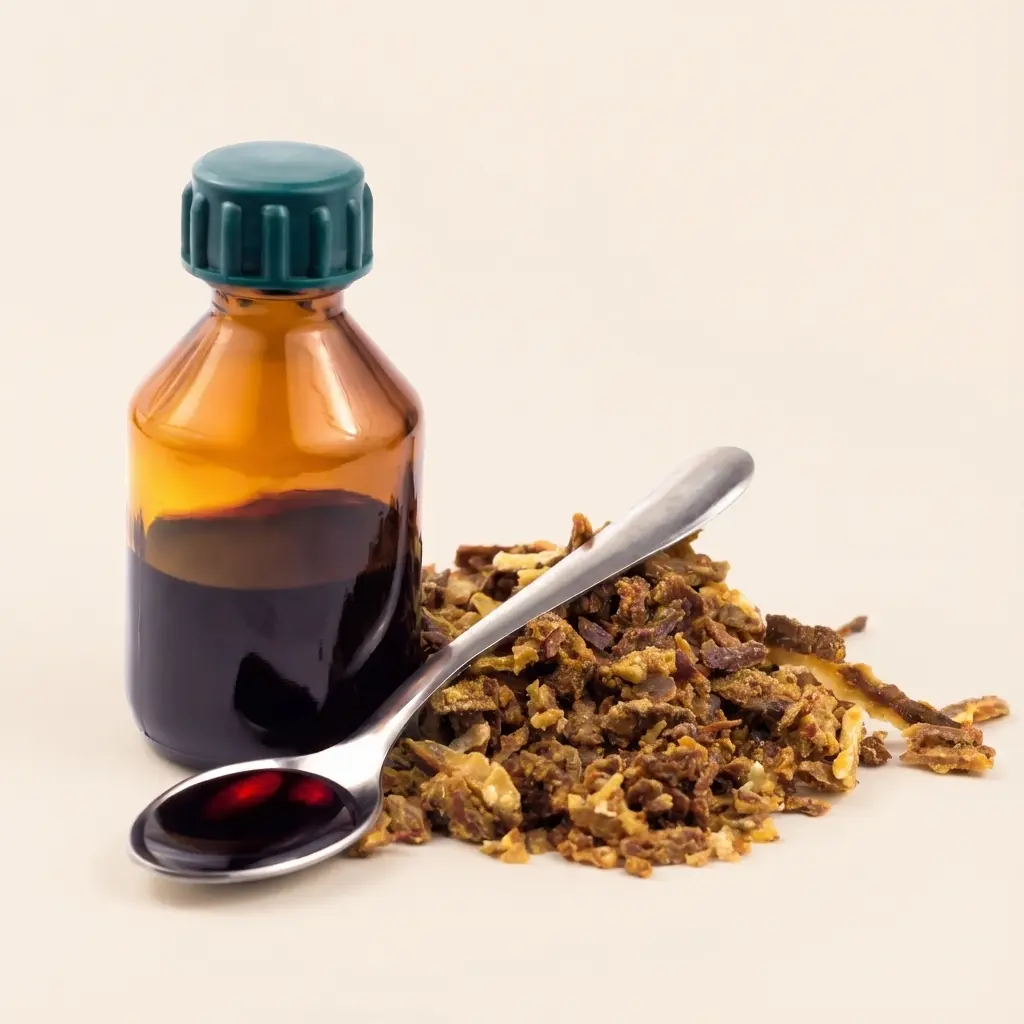
Propolis Research illustration

propolis research

Propolis Research

Extraction Technologies

  • Hydro-alcoholic extraction for broad-spectrum components
  • Water-based extraction for sensitive compounds
  • Oil-based extraction for lipid-soluble actives

Product Development

ApiHealth is expanding its propolis extraction methods to support new health formulations. Significant progress has been made in hydro-alcoholic extraction, enabling a wider range of active compounds to be used in final products.

Summary illustration

summary

Summary

Key Points

  • Patented and proprietary bee product technologies
  • Laboratory-controlled quality and allergen reduction methods
  • Advanced extracts: VENZ™ venom, pollen extracts, propolis extracts
  • Integrated approach ensures safety, traceability, and biological activity

ApiHealth Innovation Timeline

Milestones in bee science and extraction

A snapshot of key R&D steps that shaped VENZ™ bee venom, pollen, and allergen research.

1997

Venom collection R&D begins

ApiHealth starts early trials on bee-friendly venom collection, establishing lab analytics for mellitin and PLA2.

2000

Patented collection technology

Non-harmful venom collectors are patented, enabling repeatable, high-quality VENZ™ harvests with full traceability.

2010

Pollen extraction breakthroughs

Shell-breaking and extract refinement improve bioavailability of pollen actives for functional products.

2020

PLA2 allergenicity study

Honey–venom matrix research shows reduced allergenicity of PLA2, informing safer formulations.

Bringing science to every jar

From bee-friendly venom collection to advanced extraction, ApiHealth bridges laboratory precision with everyday wellness products.

ApiHealth Science & Research | VENZ™ Bee Venom, Pollen, Propolis